

Overall Rating: 8.4/10
Most fitness programs are obsessed with intensity.
Train harder.
Lift heavier.
Push further.
Burn more calories.
Increase output constantly.
Very few ask a more uncomfortable question:
What happens when your body starts fighting back?
That’s exactly the space MELT Method built its identity around.
The program focuses heavily on:
- connective tissue hydration,
- nervous system regulation,
- pain reduction,
- mobility,
- and self-treatment using soft rollers and specialized techniques.
And honestly, that positioning makes sense today.
Because modern adults are physically wrecked.
People spend:
- 8–12 hours sitting,
- staring at screens,
- sleeping badly,
- carrying stress constantly,
- and exercising inconsistently.
Then they wonder why:
- their backs hurt,
- their hips feel locked,
- their neck stays tight,
- or their recovery keeps declining.
MELT targets that exact demographic:
people who don’t necessarily want extreme fitness anymore —
they want their body to stop feeling chronically irritated.
MELT Is Less About Fitness and More About Nervous System Relief


This is the first thing people misunderstand.
MELT is not designed to feel like an intense workout.
In fact, many first-time users initially think:
“This feels too easy to matter.”
That reaction is common because modern fitness culture trained people to associate effectiveness with suffering.
MELT operates almost opposite that philosophy.
The sessions focus heavily on:
- gentle movements,
- fascia stimulation,
- breath awareness,
- decompression,
- and subtle nervous system responses.
Some people love this immediately.
Others become skeptical because the process feels almost “too calm.”
But honestly, many stressed adults desperately need calmer physical systems.
The Program Appeals Strongly to People in Physical Burnout
One major reason MELT became popular:
It targets people who are tired of feeling physically inflamed all the time.
Especially:
- desk workers,
- aging athletes,
- stressed professionals,
- chronic tightness sufferers,
- and people recovering from repetitive strain.
The program markets heavily around:
- pain reduction,
- better mobility,
- stress relief,
- and body maintenance.
That positioning works because millions of adults exist in a strange middle zone:
not seriously injured,
but never fully comfortable either.
MELT speaks directly to that audience.
The Soft Rollers Create a Very Different Experience Than Traditional Foam Rolling


Traditional foam rolling often feels brutal.
People grimace through pain believing:
“More pressure equals better recovery.”
MELT takes the opposite approach.
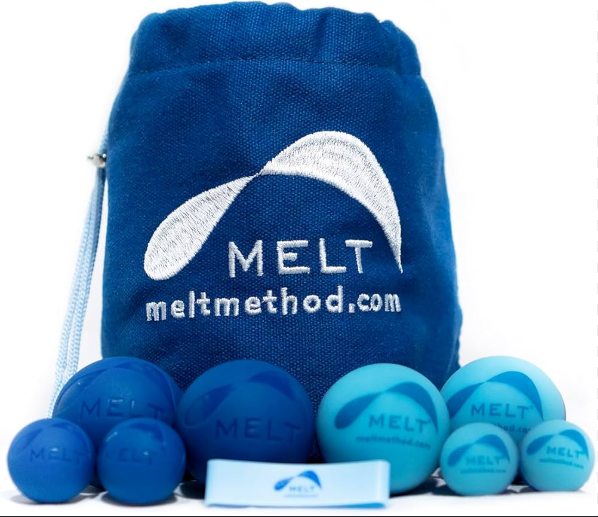
The rollers are softer and designed to stimulate connective tissue without aggressive compression.
That changes the experience dramatically.
The sessions feel:
- gentler,
- slower,
- less intimidating,
- and more recovery-focused than performance-focused.
This makes the program especially accessible for:
- older adults,
- beginners,
- people with sensitivity,
- or individuals intimidated by hardcore mobility systems.
Some advanced athletes may find the softness underwhelming.
But many average users actually prefer it.
The Science Around Fascia Still Feels Slightly Fuzzy
This is where skepticism enters.
MELT discusses:
- connective tissue hydration,
- fascia communication,
- nervous system regulation,
- and neurofascial response heavily.
Some of these concepts are supported by emerging research.
Others still exist in areas where scientific consensus feels incomplete.
That doesn’t automatically make the system ineffective.
But it does mean some claims occasionally sound more definitive than current evidence fully supports.
This is important because wellness industries sometimes drift into:
- exaggerated body-language,
- vague recovery claims,
- or pseudo-scientific marketing terminology.
MELT generally stays more grounded than many wellness brands —
but critical thinking still matters.
The Biggest Strength: Consistency Feels Sustainable


Many fitness systems fail because people cannot maintain them long term.
MELT succeeds partly because the barrier feels low.
The sessions are:
- approachable,
- short,
- low-impact,
- and psychologically non-threatening.
That matters enormously.
People are far more likely to continue routines that:
- reduce stress,
- feel restorative,
- and don’t require intense motivation daily.
For burned-out adults, sustainability often matters more than optimization.
And honestly, the wellness industry underestimates this constantly.
MELT Feels Especially Appealing to Women Over 35
The brand clearly resonates strongly with:
- women experiencing chronic tension,
- aging-related stiffness,
- postural discomfort,
- hormonal stress,
- and recovery decline.
That audience alignment feels intentional.
The program avoids aggressive “fitness culture” energy entirely.
Instead, it emphasizes:
- body awareness,
- self-care,
- gentle recovery,
- and long-term maintenance.
Some users find this comforting.
Others may find it overly soft or wellness-oriented.
Again, personality fit matters heavily here.
This Is Probably Not Enough as a Complete Fitness System


This is important.
MELT works best as a supplement — not a total replacement for physical fitness.
You still need:
- strength training,
- cardiovascular health,
- muscle maintenance,
- mobility work,
- and general movement.
Some wellness systems accidentally encourage people to replace exercise entirely with recovery rituals.
That’s usually a mistake.
MELT fits best alongside:
- walking,
- yoga,
- resistance training,
- Pilates,
- or sustainable fitness routines.
Think of it as maintenance infrastructure, not complete physical conditioning.
The Online Experience Feels More Organized Than Many Wellness Platforms
A surprising number of wellness brands feel chaotic online.
MELT’s ecosystem generally feels:
- structured,
- educational,
- accessible,
- and relatively professional.
The courses, tutorials, and guided systems are easy to follow compared to many alternative wellness programs.
That organization matters because recovery practices become frustrating quickly if instruction quality feels vague.
MELT does a solid job simplifying techniques for normal users.
Some People Will Absolutely Think This Is “Too Gentle”
This is unavoidable.
Certain personality types associate wellness only with intensity.
For those users, MELT may feel:
- too slow,
- too subtle,
- too meditative,
- or insufficiently athletic.
Especially younger gym-focused users chasing:
- hypertrophy,
- performance,
- or extreme training goals.
MELT is targeting a different psychological need entirely.
The audience usually wants:
“I want my body to feel functional again.”
Not:
“I want six-pack abs by summer.”
Who Should NOT Buy MELT Method?
MELT may disappoint people who:
- want hardcore workouts,
- prioritize athletic performance,
- dislike wellness-oriented approaches,
- or expect dramatic overnight transformation.
It’s also probably insufficient alone for:
- major fat loss,
- muscle building,
- or serious sports conditioning.
This is recovery-focused body maintenance — not elite athletic programming.
Who MELT Method Fits Perfectly


MELT works extremely well for:
- stressed professionals,
- aging adults,
- desk workers,
- chronic tightness sufferers,
- and people wanting sustainable recovery routines.
Especially people thinking:
“My body constantly feels tense and exhausted.”
That’s exactly where the system feels most valuable.
Final Verdict: MELT Method Succeeds Because Modern Bodies Are Chronically Overstressed
The real reason MELT resonates is simple:
Modern lifestyles quietly destroy physical comfort.
People sit too much.
Sleep poorly.
Carry stress constantly.
Move inconsistently.
And often ignore recovery until pain becomes unavoidable.
MELT addresses that reality directly.
The system:
- feels accessible,
- encourages consistency,
- reduces intimidation,
- and promotes body awareness in a way many fitness systems ignore.
But it’s not magic.
Some scientific claims still deserve skepticism.
And the program works best as part of a broader health strategy — not a total solution.
Still, for people whose bodies feel older, tighter, and more exhausted than they should?
MELT Method offers a surprisingly approachable path toward feeling physically calmer again.
Detailed Scorecard
| Category | Score |
|---|---|
| Accessibility | 9.0/10 |
| Recovery Focus | 9.1/10 |
| Beginner Friendliness | 9.2/10 |
| Scientific Clarity | 7.2/10 |
| Long-Term Sustainability | 8.9/10 |
| Athletic Performance Support | 6.8/10 |
| Stress Reduction Appeal | 9.0/10 |
| Ease of Home Practice | 8.8/10 |
| Overall Wellness Value | 8.5/10 |
| Overall Rating | 8.4/10 |
Disclaimer
The MELT Method is not medical treatment and should not replace professional healthcare advice, diagnosis, or physical therapy. Results vary depending on individual health conditions, consistency, lifestyle, and physical limitations. Individuals experiencing severe pain, injury, or chronic medical conditions should consult qualified healthcare professionals before beginning any recovery or movement program.