


Wenwan walnuts are the matched pairs of carved Chinese walnuts that collectors roll in one hand for years until the shells turn deep red and glassy. They look like ordinary nuts in a photograph. They are not: a well-matched pair is graded to the millimetre, priced by pattern, and the market for them once ran hot enough to crash. This guide explains what actually drives the price, how to pick a first pair, and what the numbers look like in 2026.
What Wenwan Walnuts Actually Are
The collectible ones come mainly from Juglans hopeiensis, the Ma walnut of the mountains around Beijing, Tianjin and Hebei, with some pieces from J. sigillata and J. mandshurica. They are bred for thick shells and pronounced ridge patterns, not for the kernel. Nobody eats them.
The practice is old. Walnuts have carried cultural weight in China since the Han dynasty, the hobby faded during the Cultural Revolution, then came back strongly in the reform era. What you are buying is a pair you will handle daily for years, so the object changes while you own it.
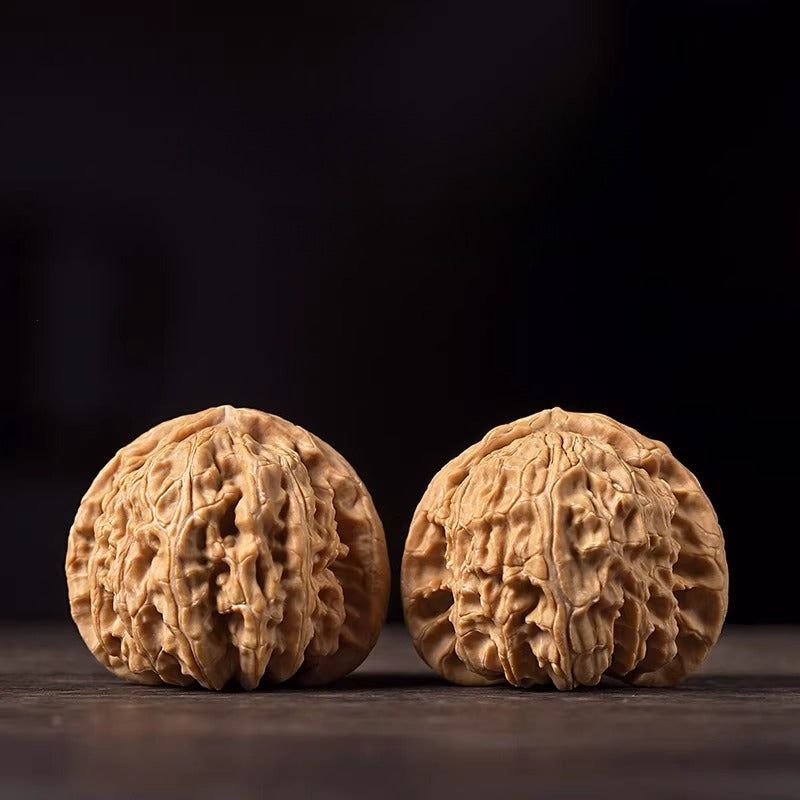
The Four Classic Shapes
Most Wenwan walnuts fall into a handful of named shapes, and the name tells you the silhouette:
- Shizitou (Lion Head): broad, squat, heavy shoulders. The most collected shape and the easiest to find well matched.
- Hutou (Tiger Head): taller and narrower than a Lion Head, with a more upright profile.
- Jixin (Chicken Heart): pointed at one end, slim in the hand, favoured by people with smaller palms.
- Guanmao (Official’s Hat): flattened top with a distinct brim, the most sculptural of the group. Gongzimao, the Prince’s Hat, is its close relative.
Sellers of Wenwan walnuts layer sub-names on top of these — Four-Pillar Lion Head, Kylin Pattern Official Hat, Wheat-Ear Tiger Head, Apple Garden, Starry Sky. Those describe the ridge pattern or the orchard the nuts came from, not a separate species. They matter for looks and price, not for how the pair behaves in your hand.
Size: the Number That Decides Everything
Wenwan walnuts are sold by millimetre. The collectible band runs roughly 30 to 50mm, and most listings you will meet sit between 36mm and 43mm. Smaller wild-tree nuts have their own following, but the mainstream is that middle band.
Pick your Wenwan walnuts by hand size, not by prestige. If a pair is too large you cannot rotate them smoothly, which defeats the point; too small and they slip. For an average adult palm, 38–40mm is a safe first choice. Larger nuts cost more because the trees produce fewer of them, not because they perform better.
Why Matched Pairs Cost So Much More
This is the part that surprises newcomers. A single good nut is cheap. A pair that matches in size, weight, shape, ridge density and colour is rare, because the two nuts have to come off trees that happened to produce near-identical fruit. Collectors have historically gone as far as advertising publicly to find a mate for a single exceptional nut.
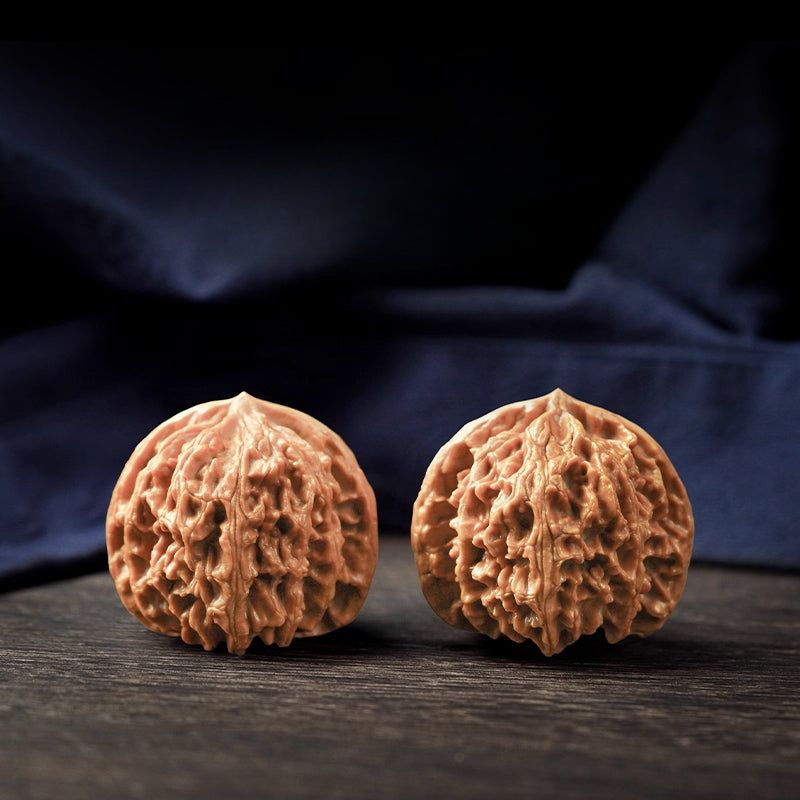
Grading looks at four things: overall size, ridge pattern, symmetry of shape, and colour consistency between the two. A pair that is 1mm apart in diameter, or noticeably different in ridge depth, drops out of the top tier immediately. You can see the effect across a single Wenwan walnut collection — the same shape and orchard can span $30 to four figures purely on match quality.
What Wenwan Walnuts Cost in 2026
Real numbers, from a current Western storefront carrying 30 walnut listings across about 170 size and finish variants:
- $26 – $50: beginner pairs. Wheat-Ear Tiger Head, Prince Hat, wild iron walnuts. Perfectly good to learn on.
- $50 – $99: the bulk of the market. Lion Head and Official Hat pairs in the 38–42mm range, in natural or polished finish. The median listing here sits near $59.
- $2,999 – $3,332: Imperial Three-Ridge Lion Head at 52–53mm, sold as single one-of-a-kind pairs.
For context on that top tier: at the peak of the speculative boom between 2010 and 2014, exceptional pairs traded in China at ¥300,000–400,000. The bubble burst in 2015 after grafting expanded supply, and by 2023 comparable high-quality pairs were changing hands nearer ¥20,000–30,000. Wenwan walnuts are a hobby that had a bubble and lost it. Buy them because you want to hold them, not as an investment.
Natural Colour or Polished?
Many Wenwan walnuts are offered in two finishes. Natural colour means the nut is essentially as it came off the tree, cleaned but not worked. Highly polished means the surface has already been smoothed and brightened.
Polished pairs look better on day one. Natural pairs give you the whole arc of the patina yourself, which is the actual point of the hobby for most collectors. If you are buying your first set to play with, natural is the more satisfying choice; if you are buying a display piece or a gift, polished photographs better.
How the Patina Forms, and How to Care for a Pair
The prized deep red gloss on Wenwan walnuts comes from friction plus the oil and sweat of your own hands, built up over months of swirling, kneading and rotating the pair. There is no shortcut and no product that replicates it honestly.
- Handle with clean, dry hands. Grease and food residue leave dark blotches that do not even out.
- Brush the ridges with a soft brush regularly so grime does not set into the grooves.
- Keep them away from radiators, direct sun and sharp humidity swings — shells crack when they dry too fast.
- Do not soak, boil or oil them. Water swells the shell and ruins the surface you are trying to build.
- Store the pair together, ideally in a cloth pouch rather than sealed plastic.
Buying Your First Pair Without Regret
A practical checklist for buying Wenwan walnuts:
- Spend under $60 first. You will learn what size and shape suit your hand, and that knowledge is worth more than the extra spend.
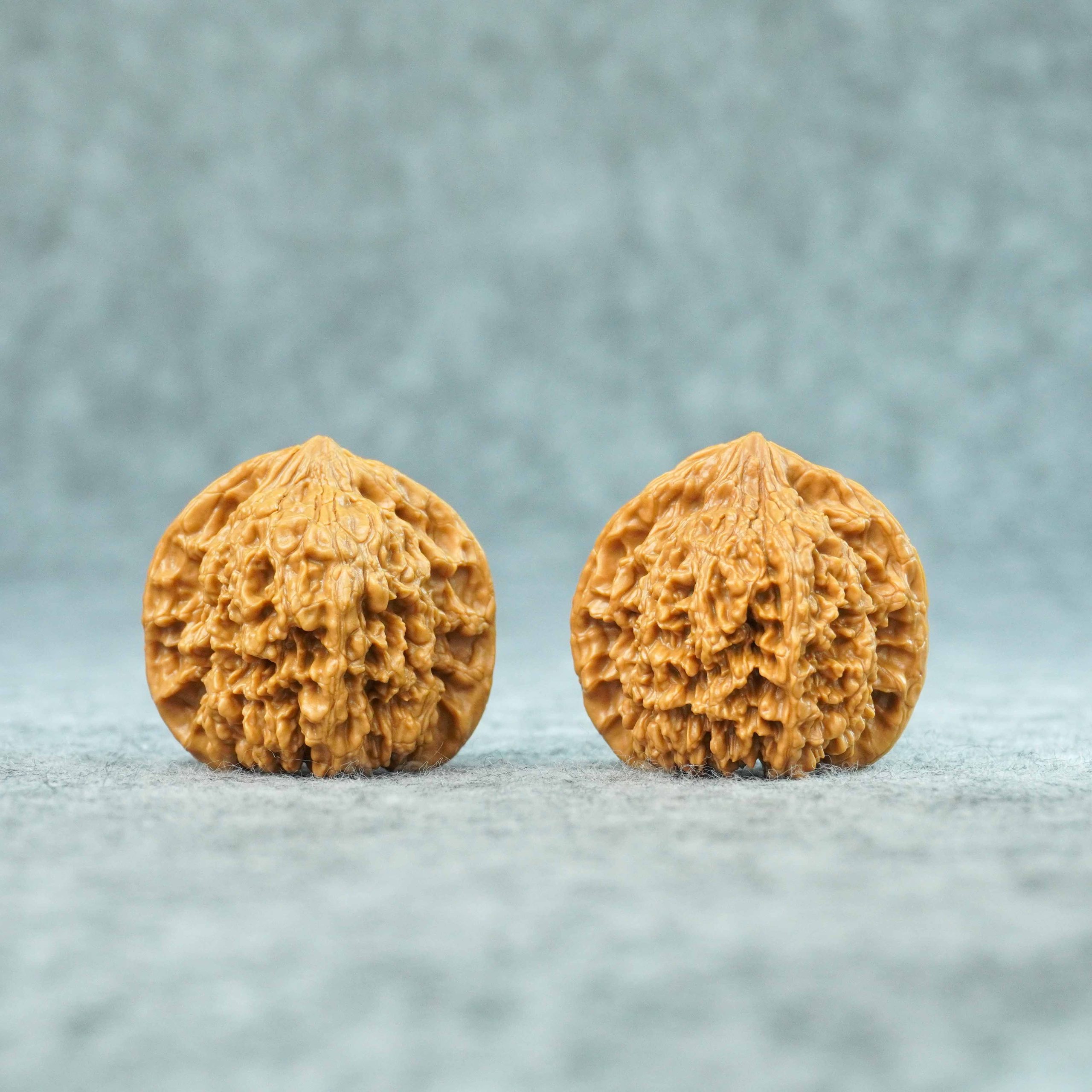
- Insist on photographs of the actual pair. Because every pair differs, a stock photo tells you nothing. Listings that show the exact item are the ones worth trusting.
- Check the stated millimetre size, both nuts. Any honest seller lists it.
- Read the return policy before a big order. One-of-a-kind natural goods are the category where exceptions get applied.
- Ignore claims of health effects. Rolling walnuts is a pleasant hand exercise and a meditative habit. It is not a medical treatment for anything.
If you want to compare shapes and sizes side by side, a store that photographs each pair individually makes the differences obvious — you can browse graded Wenwan walnut pairs here and see how a 38mm Lion Head reads against a 42mm Official Hat.
Final Thoughts
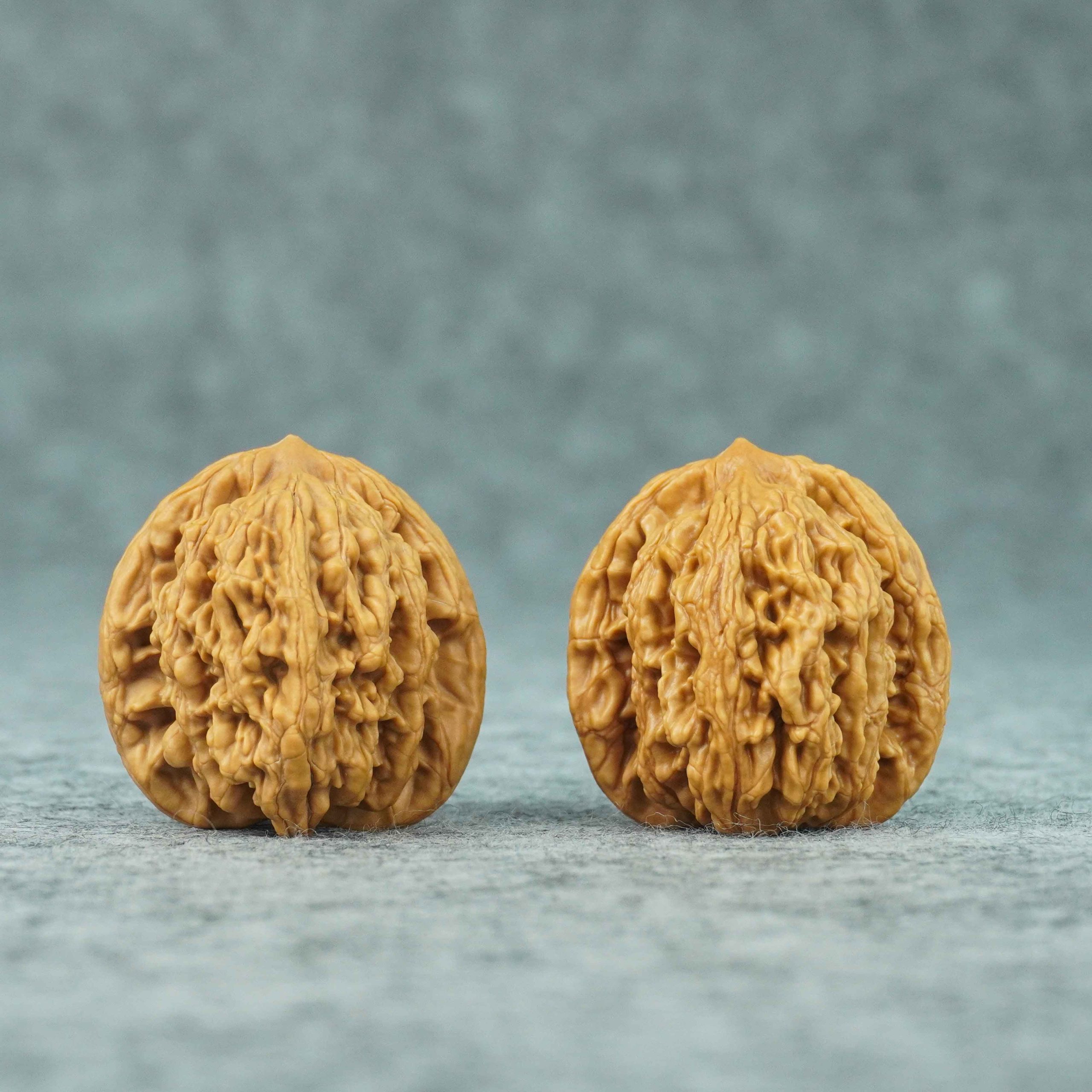
Wenwan walnuts reward patience and almost nothing else. The shape you choose is preference, the orchard names are marketing, and the price gap between a $40 pair and a $3,000 pair is mostly the difficulty of finding two nuts that match. What you get out of either is the same daily habit and the same slow colour change.
Start cheap, in natural finish, in a size your hand likes. If the habit sticks after six months, then it is worth looking at a graded pair of Wenwan walnuts. You can check current sizes and prices before deciding how much to commit.
Wenwan Walnuts FAQ
What size Wenwan walnuts should a beginner buy?
For an average adult hand, 38–40mm rotates comfortably. Most listings fall between 36mm and 43mm, so there is plenty of choice either side.
How long does it take to develop a patina?
Months of regular handling for visible colour, and years for the deep red gloss collectors prize. It depends entirely on how often you use the pair.
Are Wenwan walnuts a good investment?
Treat them as a hobby, not an asset. The market peaked at ¥300,000–400,000 per top pair around 2010–2014, crashed in 2015, and by 2023 comparable pairs sold nearer ¥20,000–30,000.
Can you eat Wenwan walnuts?
No. They are bred for shell thickness and pattern, not for the kernel, and they are sold as collectibles rather than food.
Do Wenwan walnuts have health benefits?
Rolling them is gentle hand movement and many people find it calming, but that is the honest extent of it. They are not a treatment for arthritis, circulation or any medical condition, and should not replace medical care.